 United States
 India
India United Kingdom
 Australia
 Canada
 Nigeria
 Others


 Learning Saint
In the current scenario, one of the most in-demand fields in technology is cybersecurity. Almost every business is moving online and starting to store sensitive data digitally, which is why the number of skilled professionals to secure that information keeps increasing. If you are beginning your journey, you must understand the different cybersecurity career paths that are available. It will help you in choosing a direction that would be accurate to your interests and strengths.
This article will break down the major entry points, skills, and specialisations within this field, which will be explained in simple and easy-to-follow language. If you are a student, an individual looking to pursue a career change, or just have a curiosity about this industry, this guide will make sure that you understand the point you can begin with.
You can also read about how to become a cybersecurity expert in detail here.
What makes cybersecurity a strong career choice?
Understanding career paths in cybersecurity will be useless if you do not know why so many people are choosing cybersecurity as a career option. Brands, governments, and individuals – almost everyone is dependent on digital systems for carrying out business or professional operations. This simply means that it is becoming equally important to secure those digital systems from dangers like hacking, data theft, and fraud.
This increase in dependency on technology has ultimately created a strong and stable urgency for skilled professionals who are capable of finding weaknesses, responding to threats, and creating better and stronger defences. The rest of the tech fields ask for years of specialised education, whereas many cybersecurity paths are basically open to people coming from various backgrounds, including those who are switching their careers from irrelevant fields.
Is there a requirement for a degree to start working in cybersecurity?
Almost every beginner has one question to ask, which is whether there is a requirement for a formal degree to start their career in cybersecurity. The honest answer to this is that it completely depends on the chosen job profile and the employer. Some job profiles, specifically in large corporations or government-based roles, might prefer or ask for a degree in computer science, information technology, or a related niche.
However, various beginner-level roles prefer hands-on skills, certifications, and demonstrated knowledge equally or even sometimes more than a formal degree. There are many successful professionals in this field that built a strong and successful career through self-study, certifications, and practical experience, without a formal degree.
What are the basic skills for a beginner to start with?
Irrespective of the path that you choose in the cybersecurity niche, there are a few foundational skills that come up across almost all career paths that are related to cybersecurity.
- Core networking – The basics of networking include understanding how data moves across networks, involving concepts such as IP addresses, firewalls, and routers.
- Knowledge about the operating system – Knowledge about the operating system is simple, meaning being familiar with both Windows and Linux systems. It is important because security professionals usually work across different environments.
- Basics of scripting and programming – The most common and beginner-friendly programming language is Python. It is commonly used to automate tasks and understand how threats work. It is important to have a basic knowledge of these programming languages.
- Being aware of the common attacks – Some of the threats or attacks have already been categorised and named. Being in cybersecurity makes it important that you are aware of the common threats going on out there, along with the solutions to defend against them.
- Critical problem-solving skills – Most of the work included in the cybersecurity field includes investigating problems, how and where the system was breached, and identifying solutions to them, which is why this niche requires critical thinking and problem-solving skills.
Developing these core cybersecurity skills at an early stage of your career helps you build a strong foundation irrespective of the specialisation that you would choose later.
What are some beginner-level roles appropriate for starting your journey?
When it is the initial stage of your cybersecurity career, it is advised to not go for highly specialised job profiles right away. Instead, you can begin with the foundational job profiles that will help you build important experience.
The following are some of the job profiles to start as a beginner in cybersecurity:
1. IT support desk
When you step into IT or cybersecurity, you will see most of the professionals starting their journey in general IT support roles, which ultimately helps them build a stronger and better understanding of how computer systems, networks, and software operate in the real and practical world. This experience offers a valuable foundation before shifting towards a security-focused role.
2. Security Operations Center (SOC) Analyst
Being an SOC analyst, you are responsible for monitoring an organisation's or brand’s system and looking for signs of suspicious activities. They usually have to perform these activities while working as part of a team that is supposed to identify and respond to potential threats. This is the most common entry point that would lead you directly into the field of cybersecurity. It provides hands-on experience and exposure to the actual security tools and incident response processes.
Also Read: how to become a cybersecurity analyst
3. Junior Penetration Tester
Some beginners even start their careers in junior roles in supporting penetration testing teams. This job profile will include learning how to identify vulnerabilities in systems. These activities are all performed under the supervision and guidance of an expert and experienced tester. While choosing this path, you will be required to have strong foundational technical skills and an actual interest in understanding how systems can be successfully exploited.
4. IT Auditor or Compliance Assistant
Individuals who are interested in the policy and governance side of security can start their journey in a compliance or audit support role. It can provide a strong introduction to how organisations manage risk and meet regulatory requirements.
What are some popular career paths in cybersecurity?
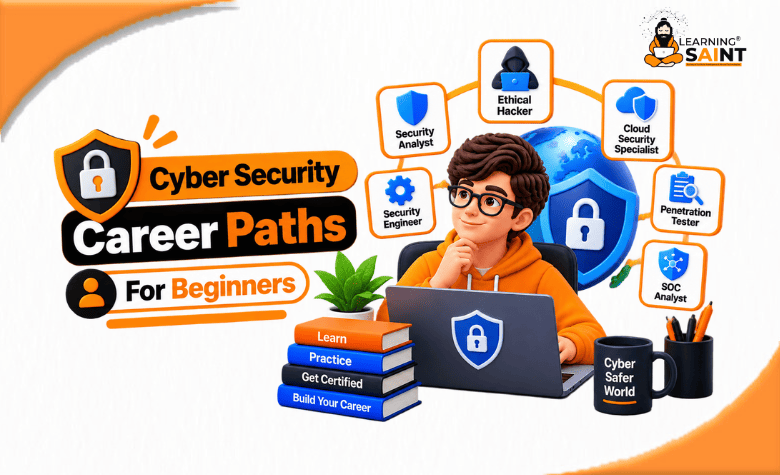
Once you have built enough foundational experience, there are various specialised cybersecurity career paths waiting for you as your next step. Each of them focuses on separate aspects of protecting systems and data.
The following are some of the specialised roles in the field of cybersecurity:
1. Security Analyst
A security analyst, as suggested by the name itself, is responsible for monitoring systems, investigating potential threats, and helping implement protective measures. This job role is generally built directly on SOC analyst experience and acts as a strong stepping stone towards more advanced and modified security positions.
2. Penetration tester (Ethical Hacker)
Penetration testers are hired to simulate attacks on systems, helping organisations find and fix vulnerabilities before real attackers can exploit them. This path often requires strong technical skills and, in many cases, recognised certifications demonstrating ethical hacking knowledge.
3. Incident Responder
An incident responder is an individual who is given the responsibility to investigate and handle security breaches whenever they happen, working to contain damage, understand how the breach happened, and help prevent similar incidents in the future. This job role needs strong skills to analyse and the ability to work and organise under pressure while keeping calm.
4. Security Engineer
Security engineers design and build the systems and tools used to protect an organisation's infrastructure, such as firewalls, intrusion detection systems, and secure network architecture. This path usually appeals to individuals who are comfortable with hands-on technical building and problem-solving.
5. Digital Forensics Analyst
As a digital forensic analyst, you will be asked to investigate cybercrimes by simply reviewing digital evidence, such as compromised devices or network logs, usually working closely with law enforcement or legal teams. This path will suit candidates who have strong attention to detail and are interested in investigative work.
6. Governance, Risk, and Compliance (GRC) specialist
GRC specialists are the law-maintaining category in cybersecurity. They focus on the policy side of security, helping the companies meet their regulatory and legal requirements, manage risks, and maintain proper documentation and controls. People with an interest in the business and legal side of security will find this job suitable and accurate for them. This job is a mix of legal and technical work.
7. Cloud Security Specialist
Each day, more and more organisations are moving their systems to cloud platforms; specialists focused on securing cloud environments are becoming increasingly important. This path usually builds on general security knowledge. It is combined with specific expertise in cloud platforms and their unique security considerations.
What are some of the important certifications in cybersecurity?
Certifications can play a very important part in helping beginners to demonstrate their knowledge and stand out when they are applying for beginner-level jobs. The following are some of the widely recognised important cybersecurity certifications for those who are starting their journey:
- Comp TIA Security+ – It is a popular certification that is suitable for starting out, as it covers the foundational security concepts.
- Comp TIA Network+ – This certification is useful for creating strong networking fundamentals before specialising in further paths.
- Certified Ethical Hacker (CEH) – CEH is a benchmark that specifically focuses on penetration testing and ethical hacking skills.
- GIAC certifications – GIAC certifications are not a single certificate; instead, it is a range of specialised certifications that cover various areas of security, starting from forensics to incident response.
The more experience you gain, the more advanced certifications, such as CISSP (Certified Information Systems Security Professional), become relevant for mid-career and senior-level roles. However, these certifications typically require several years of professional experience before you are finally eligible to take them.
Also Read: Top Skills to Learn in a Master in Cyber Security Course
What are the industries that actively hire cybersecurity professionals?
Cybersecurity roles are there across almost every industry, as virtually every organisation today is dependent on digital systems that need protection.
- Financial services – The investment institutions, such as banks, invest a huge amount for security reasons, as the nature of the financial data is pretty sensitive and it has strict regulatory requirements.
- Healthcare – The medical or healthcare industry is dependent on cybersecurity specialists for protecting patient records and medical systems. It has become increasingly important, specifically because of the ongoing digitisation of records and services.
- Government and defence – The government that is responsible for the entire country’s well-being needs cybersecurity specialists to protect the crucial infrastructure and sensitive information.
- Technology companies – The biggest industry looking for cybersecurity specialists is the technology-based industry. These firms usually develop dedicated internal security teams to protect their products and internal systems.
- Retail and e-commerce – The current industry that is growing the fastest is the e-commerce industry. They need cybersecurity specialists in order to protect customer payment data and prevent fraud.
Conclusion:
If you’re new to cybersecurity, looking at all the different directions you could go can be pretty intimidating at first. A good base of networking, systems, and security concepts, and then gaining experience through entry-level roles such as SOC analyst or IT support gives you a good foundation for whatever specialisation you choose next.
Whether you’re interested in hands-on technical work like penetration testing, investigative work such as digital forensics, or the policy-focused world of governance and compliance, this growing field likely has a good fit for you. Explore various cybersecurity career paths and get experience along the way. Most professionals don’t know their entire computer security career path from the get-go; rather, they build it up over time through consistent learning and hands-on experience in the field.


Reply To Elen Saspita