 United States
 India
India United Kingdom
 Australia
 Canada
 Nigeria
 Others


 Learning Saint
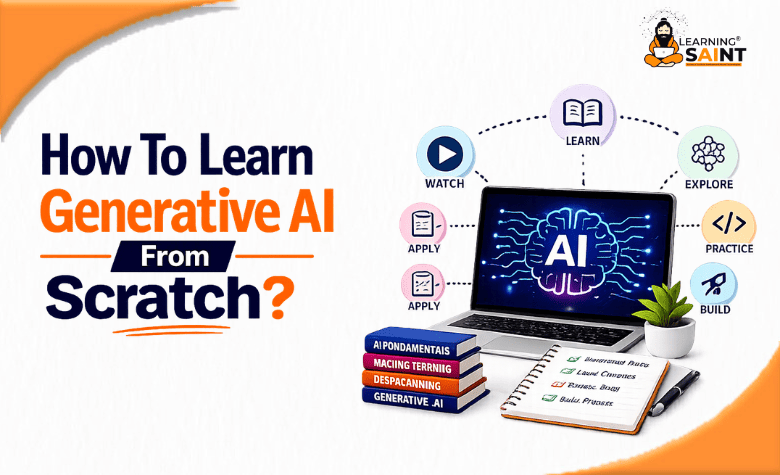
Have you ever asked your computer to generate a rhyming poem, create a picture of a funny rabbit in a lab coat, or provide you with the solution for your maths homework sums? This magical world that creates or generates everything we ask for is called smart technology. Currently, more and more people are eager to know and practise this tool. There are lots of people who sit at home thinking about a new career or a hobby, and they end up questioning How to learn Generative AI from scratch.
The best part about learning Generative AI is that you are not required to be a maths and statistics genius. If you have curiosity about the topic and are eager to learn about it, you can start with your journey of learning Generative AI.
If you're starting to learn something new, it can become scary at first. For example, the first time you learn to ride a bicycle, you end up falling off a hundred times, but ultimately cycling becomes easier and smoother for you. You easily ride on roads with pebbles and stones.
What Is Generative AI?
To be precise, Generative AI is a special kind of artificial intelligence that has the capability to create new content. Looking at old numbers and sorting files into boxes are all old techniques and tasks. So, if you are asking, 'What is Generative AI?', your answer is simple. Generative AI makes things that were never created before. It can write articles, create beautiful pictures, generate computer programs, and much more. It acts like a digital artist or a writer who is sitting inside your computer to help you. When you ask it a question or suggest an idea, it uses its technology to create something new.
The primitive computer programs were designed to just follow strict rules that the human worker would type for them. For example, a standard computer calculator can only add two numbers together, as it was told to do that. It is not capable of making up a brand-new game or reciting a story for you. The new form of technology is completely different. It goes through millions of examples created by humans, finds hidden patterns in them, and then uses those patterns to make its original creation. This makes it feel like you are talking to a human when you are using it.
The following are some popular tools that you can use for everyday purposes:
- ChatGPT: A technical helper that can provide maths solutions, write articles, and act like an online friend.
- DALL-E: You just have to provide a description, and it will draw a beautiful picture straight out of your words. It acts like a digital artist.
- GitHub Copilot: It is an assistant that helps computer software generate code faster. It acts like a coding specialist helper.
- Midjourney: If you like creating hyper-realistic or detailed images, this tool helps you do so. It creates highly detailed and realistic images based on your imagination.
Generative AI Explained
To understand How to learn Generative AI, you must learn how Generative AI works behind the scenes, here is an example for you. Imagine a child going to a library for the first time. He looks into hundreds of books with an apple drawn inside them. Gradually, as he has done with enough books, he generates an idea about how generally an apple looks. He understands that an apple has its own shape, red colour, stem attached to the top, and green leaves. The child did not copy any of the pictures of the apple from the books; instead, he generated his own idea of what an apple looks like. If you hand a pen and paper to the child, he will use his understanding to draw an apple that has never been seen before.
While discovering about How to learn Generative AI, you will come across people talking a lot about Models. A model is nothing but a word that is used for the computer brain that has completed its library reading. These models get their training from big companies through powerful computers. Once this training is complete, the model is ready to be used on your phones and laptops as a tool. It waits for your instructions and the task that it needs to perform.
Know about Machine learning.
Before moving on in this educational journey of How to learn Generative AI, it is important that you step back and understand machine learning better. It is important that you look back at the complete map of machine learning again. It is exciting to learn more about the world of creative texts and images, but if you understand the core math and logic ideas, it will keep you safe from mistakes. To understand it better, think about machine learning as a huge toolbox. Creative tools are just one polished wrench kept in that box. Many other tools will help predict the weather, find credit card fraud, or navigate self-driving vehicles safely down the road.
Understanding this broader field means that you must learn about data preparation. Computers need clean and organised data to learn from. They cannot read from dirty and broken data. If the photo collection that you provided to the computer is blurry, the computer will not understand the art of creating photos perfectly. Some people work in this field and spend a lot of their time cleaning up the data, removing mistakes, and making sure that everything is fair and balanced. If you learn how to prepare the data correctly, you will ensure that your creative models are reliable and safe for everyone to use. The following are the important steps in machine learning that you must look at:
- Data Cleaning: Data cleaning refers to removing the wrong information, fixing typing errors, and getting rid of harmful files before the computer reads them.
- Feature Selection: Feature selection refers to choosing the most important details for the computer to concentrate on. For example, looking at the shape of the car.
- Model Evaluation: Model Evaluation refers to testing out the computer’s brain with a new and fresh quiz to see if it actually knows its basics or if it simply crammed up the previous questions.
- Responsible AI: Responsible AI refers to confirming the outputs to ensure that the machine is being fair, kind, and safe for actual people to use.
You can also learn how machine learning benefits businesses.
Learn Prompt Engineering
Now, you must have understood how the computer brain learns. But what is the point if you do not know how to talk to a computer? You must know how to speak to a computer. Here comes another skill known as prompt engineering. Prompt engineering is broken down into 2 parts. A prompt is a message, command, or question that you type into the computer. The art of choosing the right words so that the computer gives you the correct answer is called prompt engineering. It is important that you understand what is prompt engineering.
The mistake that many beginners make is typing short and irrelevant prompts. If you just type “write a story about a tree”, the computer will have no clue about the type of story you want. It will have to guess about the story, and you will end up with wrong answers. When you start practising how to learn Generative AI from scratch, you will start discovering the significance of adding context, details, and style choices. You will learn how these factors make a massive difference in your results.
The following tips will help you become truly excellent at prompt engineering. You will ace this skill by following these pointers:
- Provide the AI a Role: Give your computer a role. Tell him what it should act like. For example, “act like a math teacher”.
- Try to Be Specific: Avoid saying general prompts. Instead of saying “Tell me about dogs”, say “Tell me 10 interesting facts about pitbull dogs."
- Explain your Audience: Tell your computer about the audience that are going to read the answer. Explain the audience type that the computer has to keep in mind. For example, "Explain machine learning so that a 5-year-old would understand."
- Provide Examples: Provide your computer some examples about the style you wish to see before asking it to write the final answer.
Detailed Step-by-Step Learning Plan
Now that we have explored all the big terms and sections, let us put everything together into a clear plan. When you want to find out how to learn Generative AI from scratch, you do not need to do everything at once. You can think of it like going to school; you pass first grade before you move on to second grade. This simple plan will guide you from a total beginner to someone who can confidently build neat things.
Step 1: Play with Free Tools
The very best way to start is by becoming a user. Open up your web browser and spend a few days talking to systems like ChatGPT or making silly drawings with DALL-E. See how they react when you change your words. This builds your excitement and shows you what is possible without writing a single line of code.
Step 2: Master Your Words
Spend a week practising prompt engineering. Try out the tips we talked about, like giving the machine a specific practice and asking for a specific format. See how much better the answers get when you act like a clear movie director. This skill is useful no matter what job you do in the future.
Step 3: Getting Started with Python
Python is the best computer language for learning if you want to go from using tools to building tools. It is in plain, simple English words, so it is very easy to understand for beginners. There are hundreds of free videos on the internet which will teach you the basics of writing scripts in python in just a few hours.
Step 4: Make Small Projects
Don't just read books; don't just watch videos without doing work. Construct small fun projects to showcase your skills. You could make a simple website that summarises long news articles or a little chatbot that tells knock-knock jokes. The best way to show others that you really know your stuff is to put projects in a portfolio.
Useful Tools to Guide You about using Generative AI
On this long journey of understanding How to learn Generative AI, you are not alone. You have lots of tools and resources with you that will navigate you through this journey. The following are some useful resources that can help you master the art of Generative AI:
- Google AI Essentials: It is a free certificate programme for beginners that will teach you how to utilise creative tools to do daily-life tasks. It is a great opportunity for beginners to understand Generative AI better.
- Coursera Intro to Generative AI: It is a one-hour-long video course from google cloud, that explains the basic differentiation between traditional and creative models.
- YouTube Tutorials: For example, Intellipaat and other free bootcamps have step-by-step tutorials with someone writing code, and you can follow along.
- Hugging Face: It is a friendly online community of developers who are eager to share their clever models, which will help you try out various systems for free.
Take Your Generative AI Skills Further
Want to move beyond the basics and build practical Generative AI skills? Explore the Post Graduate Program in Generative AI by Learning Saint to learn advanced concepts and develop industry-relevant expertise.
Explore the Generative AI Program →
Conclusion:
The creative world of computers is huge and amazing. You start with How to learn Generative AI, but soon you will reach where you create your own models. You have understood how these systems learn from a huge collection of examples and how they use those learned patterns in creating their original text or images. If you start exploring the foundations of machine learning, master the art of prompt learning, and delve into the world of deep learning, you will achieve complete knowledge about how this system works.
The most important thing to remember is that this is a journey that is made up of many small steps, day by day. You don't have to learn every math formula or coding language in your first week. Start by playing with the tools that are available online today, practise writing clear and detailed prompts, and remain curious about how the systems think. As time goes on, your confidence will grow, and you will be building amazing things. Technology’s future is wide open. If you choose to learn today, you are ready to help shape it.


Reply To Elen Saspita