 United States
 India
India United Kingdom
 Australia
 Canada
 Nigeria
 Others


 Learning Saint
Imagine you are running a busy food outlet. You have to track grocery supplies, manage customers and employees, count your everyday cash and other payments, and make sure that everything remains in line. Creating a separate notebook for everything sounds impractical, as it will be messy and will require too much effort. It will become so messy that you will either forget to complete an important task, as it was not clearly written, or you will have to hire more than the required number of employees, which will result in overcharging.
Now, wonder how easy it would become if you had a digital assistant that would handle everything perfectly for you. An ERP system is the same digital assistant for you. ERP systems do the job for you.
ERP is broken down as Enterprise Resource Planning. Earlier, the brands had to set up expensive and complex software on their computers in order to run them with updated technology. But now, the scenario has changed. Most brands and companies prefer using Cloud-Based ERP Systems.
With the help of ERP systems, you do not need to put your important data inside your computer under your desk; instead, you can safely keep it on the internet. ERP setup helps companies to manage their funds, product tracking, and everyday duties from any corner of the world.
It is very important to choose the right business software. This article will help you explore how the current online platforms work and help you. In this guide, we will explore how these online platforms work and how they will help you make your daily life easier.
What are Cloud-Based ERP Systems?
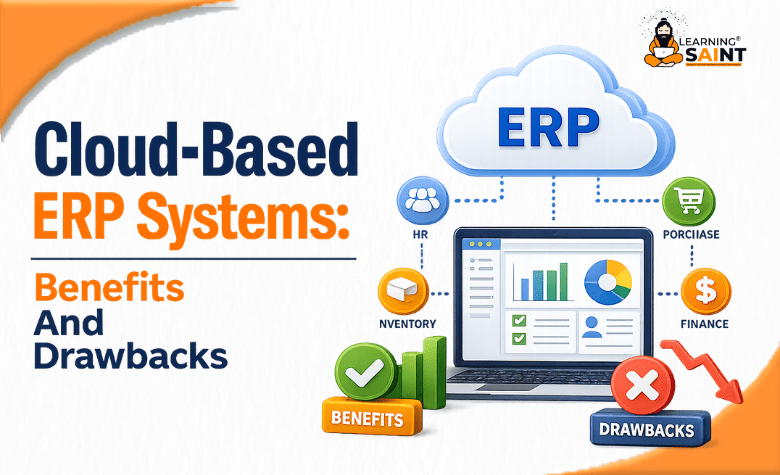
If you want to understand an ERP system, you must break it down. small parts. Imagine Enterprise Resource Planning is the main nervous system of a brand. It is the main source of connectivity between departments like Accounts, Shipping, Sales, and Human Resources. It helps them talk to each other fast.
But here you have to know about Cloud-Based ERP systems. When you add the word “cloud” to ERP systems, it means that your particular software resides on secure and remote servers that are managed by technology experts. It is not important that you have to hire a huge team of employees to maintain the expensive server machines you bought. Rather than that, you can log in through a web browser or a mobile application.
How are business management tools evolving?
Before the existence of Cloud-Based ERP systems, companies used to use “on-premise systems”. This meant that the companies used to buy physical discs, install the software on the specific computers, and pray that the computers do not crash due to heavy systems. It used to limit your interactions as a brand head or an employee. If you ever wanted to check your sales data, you were required to be in the office. You could not do it while travelling or being away from the office desk.
Cloud-Based ERP Systems came in and changed the scenario completely. Everything started being hosted on the internet. The business data became portable, flexible, and instantly updated. If an employee in the warehouse updates an order status on their device, your accounting team will see changes on their computers instantly.
Merits of online source planning:
Almost every company is switching from old computer systems to cloud-based ERP software. There are lots of advantages to switching to ERP systems. The following are the benefits of using it:
1. Huge money Savings
Opting for a traditional computer network can Cost you an arm and a leg. It requires heavy hardware setup, building a server room, and paying for a regular supply of electricity. If you choose ERP software, you will have
- No Large Setup Fees: You will not have to invest in large setups. Instead, the internet-hosted servers will help you avoid expensive servers.
- Estimated Monthly expenses: Having Cloud-Based ERP systems will predict your monthly expenses. You will have to pay a steady subscription fee that will make your budgeting easy.
- Minimise IT Bills: The ERP software provider will handle all the computer maintenance, which will save you money on technical support.
2. Outstanding Adaptability and Growth
A business that is working and performing well in the market will never limit its size. It might start with 2 employees, but it will soon move to 200 and then 2000 employees.
- Simple Scaling: If your brand wants to hire new employees, you do not have to purchase special software discs for them; you can simply add new accounts with a few clicks.
- Global Connections: When you open your company’s branch or a new office in a different city or country, Cloud-Based ERP systems will help you reach new people instantly.
- Add tools as required: Initially, you can start with basic accounting features, but later it will help you install advanced inventory as per your needs.
3. Work from Anywhere
If you want to adapt to new changes, you will have to go out of your office building. The new-age world does not work inside a single office building. Employees often get work from home, client visits, and business trips too.
- Device-Friendly: Major modern platforms offer outstanding phone and tablet applications.
- Current Updates: Cloud-Based ERP Systems help employees receive current updates. A warehouse manager can always check on product updates even if they are sitting in a client meeting.
- Better partnership: The coordination becomes better while using Cloud-Based ERP systems. It helps teams work together on the same document or budget, even if they are miles apart.
4. Automatic Safety Updates
You must keep your computer programs safe from hackers and bugs. Although it is an important thing to make sure of, it also takes lots of time and effort. Once you miss an important update, your data might get stolen or lost.
- Mess-free Maintenance: The software provider will help you update the system automatically while you are sleeping. You do not have to worry about doing it all by yourself. It helps you turn your procedures mess-free.
- Advanced Cybersecurity: Brands spend millions of their funds on cybersecurity. They spend huge sums of money to keep their cloud network safe. This level of protection works far better than what the local shops can afford.
- Constant Improvement: You do not have to pay extra for updated or advanced tools and features. You will have free access to the upgraded features and tools.
5. Improved and Quicker Data Decisions
If you keep your business information in 4 different notebooks, you will not be able to look beyond the notebooks. It will become hard for you to imagine a bigger picture. You will have to spend hours just calculating your profit.
- Combined Dashboard: It will help you count your sales, present inventory, and miscellaneous bills on one screen.
- Computerised Reports: The ERP software will provide you with built-in charts, graphs and an automatic response about where your business is spending extra money.
- Error-free results: The data in this software flows directly from sales to the accounting department. There is no reason to worry about losing some paperwork.
Demerits of online source planning
Every coin has two sides. Anything that has advantages will always have a disadvantage. These tools are great, but not perfect. Every business owner must be aware of both factors of the tool before spending money on it. The following are the disadvantages of the Cloud-Based ERP Systems.
1. Complete dependency on the internet
When the business software is completely set up on the internet, you are supposed to have a strong yet reliable internet connection.
- The risk of offline hours: If and when your office internet connection goes down, the entire office becomes offline. Your employees will lose their access to the client details or sales log or look at the inventory.
- Poor speed Troubles: If your internet connection is slow, the software will start lagging. This will start frustrating your workers, and the customer service lines will go down.
- Different location problems: If you have business operations in rural areas, you might face poor web coverage. In those areas, an online platform will cause more problems than a solution.
2. Continual Subscription Expenses
Initially, if you pay a small monthly amount, it will not bother you that much. It would feel better than buying a giant system outright. But these payments never stop.
- The Constant Bill: You will have to pay that amount of subscription every month or at least for as long as you are using the software. If you look at it after 30 years, it will add up to a huge amount.
- Rising prices: The software provider company will raise prices anytime, which will leave you with no choice but to pay a more expensive bill than you had already planned.
- Hidden charges: Some software providers charge extra for every new user who logs in. This will become an overexpensive expense when the team starts growing.
3. Limited Control Over Your Data
If you are recording your data on a computer that belongs to someone else, you are losing a piece of your privacy and independence to them.
- Believing an Unknown Vendor: You will have to believe that the software providers are keeping their systems running smoothly to protect your information from hackers.
- System Failures: The biggest tech companies also face technical crashes sometimes. Even their systems go dark, and they have nothing to do about it.
- Complicated Backups: Having a copy of a document that belongs to you only to move it to a different software provider can become hectic and complicated.
4. Personalised Limitations
Every brand does things its way. They have a way to perform certain things. A cake-baking programme might not suit your daily needs.
- Stiff protocols: Cloud systems are built a certain way; they are created to work for different brands. Due to this, you will not be able to change certain things.
- Adjusting Your Routine: You cannot change the software according to your company, so you will have to change your real business methods to adapt to the software.
- Connection problems: If you want to connect your new online platform to the tools you used to use before, it can become tricky and complicated.
5. Learning and adaptation difficulties
When you are deciding to switch to a newly opened business system, it will never be simple and straightforward. It will take lots of time, planning, and effort.
- The Adaptation Curve: You will have to make sure that your employees are learning new ways to perform their daily tasks.
- Data Transfer problems: Data is the most important thing while being a business head. If you are transferring your old customer data and other records into a new online system, it can take you weeks of careful work to complete it.
- Installation Costs: To install new software successfully, you might need to hire a team of professionals. This will add extra cost to your existing charge.
Conclusion
Cloud-based ERP systems have revolutionised the way modern businesses stay organised. Moving your core databases and management tools to the internet gives you access to incredible benefits such as lower startup costs, easy work-from-home capabilities, automatic updates, and the ability to scale your systems as your company grows.
But these digital platforms aren’t a silver bullet to every single business problem. The big advantages will have to be weighed against definite disadvantages such as total dependence on reliable internet access, recurring monthly subscription charges, and the loss of direct control over your own data systems.
Ultimately, that decision will come down to the specifics of your company. If you have a dodgy web connection or you need very bespoke, unique workflows, an older on-site setup may still be best for you. But if you’re all about flexibility, fast growth and stress-free computer maintenance, shoving your management software into the cloud is often the smartest move you can make towards a more efficient future.
Frequently Asked Questions (FAQ)
1. What are 4 types of ERP?
The 4 types of ERP are Cloud-based, On-premises, Hybrid, and two-tier.
2. What is the best Cloud-Based ERP System?
The best type of Cloud-Based ERP System depend mainly on the size of your company and your required needs.
3. What are the 4 pillars of ERP?
The 4 pillars of ERP are leadership, business processes, data, and governance.
4. Is Excel an ERP system?
No, Excel is not an ERP system.
5. Is SAP a cloud-based ERP software?
Yes, SAP offers multiple cloud-based ERP solutions.


Reply To Elen Saspita